
WEEKLY E-MAIL

ARE WE IN A GOLDILOCKS ECONOMY?
By Karen Maher
To steal a line from the popular children’s story Goldilocks and the Three Bears – a Goldilocks economy is not too hot, or too cold, but just right.
The term is used to describe an ideal state for the economy.
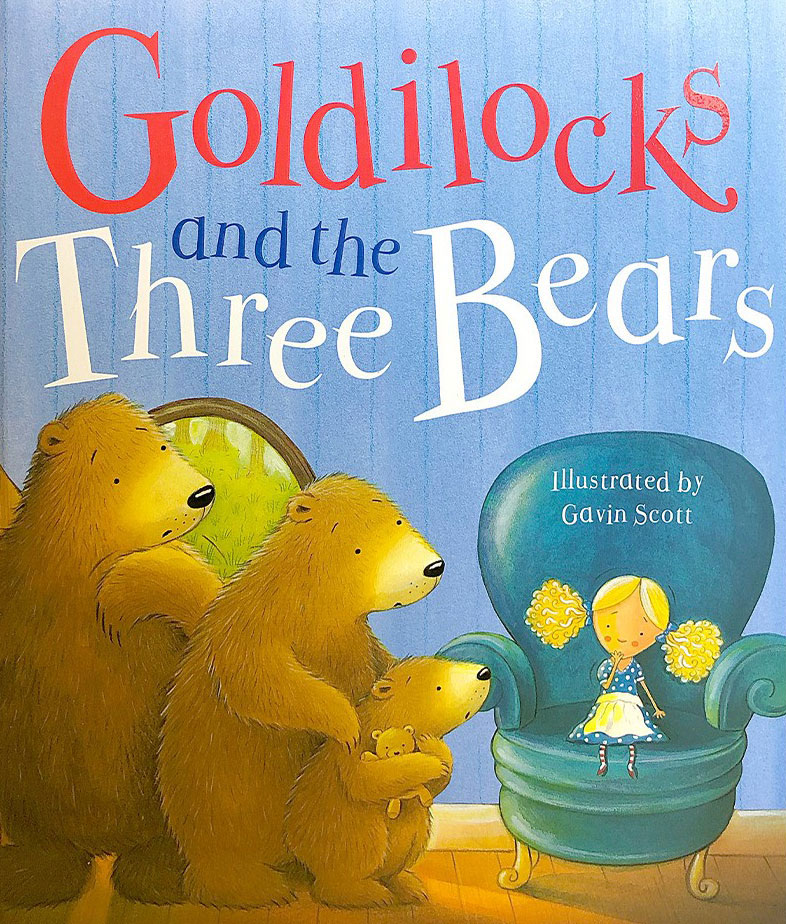
A Goldilocks economy is warm enough with steady economic growth to prevent a recession. However, growth is not so hot as to push it into an inflationary status.
The following features characterise it:
A low unemployment rate
The unemployment rate is now at 5.6%. It is expected to fall to around 5.0% by the end of the year.
An increase in asset prices
An increase in asset prices: stocks, real estate and other assets earmark a Goldilocks economy. The economic recovery in Australia has been stronger than expected and is forecast to continue.
Low interest rates
On 4 May 2021, the Reserve Bank of Australia left the cash rate at a record low 0.1% following its monthly board meeting but has upgraded its economic forecasts. RBA governor Philip Lowe restated the board will not increase the cash rate until actual inflation is sustainably within the two to three per cent target range, and this is unlikely to be until 2024 at the earliest. Even so, there remains a concern among investors that higher inflation could mean interest rates end up being raised earlier than the 2024 target.
Low inflation
Despite the strong recovery in economic activity, the recent CPI data confirmed that inflation pressures remain subdued in most parts of the Australian economy. A pick-up in inflation and wages growth is expected, but it is likely to be only gradual and modest. Annual inflation over the twelve months to March rose 1.1%.
Steady gross domestic product (GDP) or economic growth
GDP growth has been revised, with growth of 4.75% expected over 2021 and 3.5% over 2022. A pick-up in business investment is expected, and household spending will be supported by strengthening balance sheets over the past year.
It is encouraging to see several key indicators pointing to an improved economy that lead to an optimistic outlook for markets. However, there are still many roadblocks in the way that investors are cautious about. Although we have the distribution of vaccines, the pandemic is far from over, with many parts of the world still seeing rising COVID-19 cases.
Nonetheless, an expectation that a significant percentage of the world’s population will have the opportunity to be vaccinated over this year raises hopes that we may return to some version of ‘normal’ in the foreseeable future.
Karen Maher
Associate Financial Planner
Authorised Representative No. 453075
If you have any questions or comments, please email me at karen@gfmwealth.com.au
Disclaimer: This document is not an offer or invitation to any person to buy or sell any interest in or deposit funds with any institution. The information here is of a generic nature, and does not take into account your investment objectives or financial needs. No person should act upon this information without firstly seeking competent, professional advice specifically relating to their own particular situation.
Copyright: © This publication is copyright. Subject to the conditions prescribed under the Copyright Act, no part of it may, in any form, or by any means (electronic, mechanical, microcopying, photocopying, recording or otherwise) be reproduced or transmitted without permission. Enquiries should be addressed to GFM Wealth Advisory.
13 Jul 2026
4 Jun 2026
27 May 2026